
The kickoff of the 11th Space Day of China in Chengdu is far more than a commemorative event; it is a high-density showcase of the technical "yield" from a seven-decade investment in aerospace infrastructure. Since the launch of Dongfanghong-1 on April 24, 1970, the lifecycle of China’s space program has evolved from basic satellite orbital insertion to the management of complex lunar sample returns and autonomous intelligent micro-robotics. From a reader’s perspective, the "A Seven-Decade Celestial Path" theme reflects an industrial growth curve where the "precision" of missions has improved by a magnitude of 100x, moving from simple radio transmission to the ±0.5mm accuracy required for autonomous lunar sampling.
The exhibition of the Chang'e-6 return capsule and lunar samples provides a quantitative look at the "material efficiency" of China’s exploration missions. The Chang'e-5 mission, for instance, successfully returned 1,731 grams of lunar regolith, while the subsequent Chang'e-6 mission targeted the lunar far side—a region that represents approximately 41% of the Moon's surface area but remains largely unmapped in terms of high-resolution mineral distribution. According to reports by People's Daily, the "scientific dividends" from these samples include the discovery of new minerals and the recalibration of the lunar volcanic timeline by nearly 1 billion years, a result that provides a massive "data return" on the billions of dollars invested in the program.
The mechanical reality of the aerospace sector today is driven by "integration density." The lunar surface autonomous intelligent micro-robot displayed in Chengdu represents a shift toward "low-mass, high-functionality" hardware. These units, often weighing less than 10kg, must operate in temperature extremes ranging from -173°C to 127°C, a temperature amplitude of 300°C that tests the limits of modern material science. Furthermore, the integration of drone technology and satellite exhibits highlights a burgeoning "low-altitude economy" and orbital services market that is expected to reach a valuation of over $500 billion globally by 2030. In China, the "growth rate" of the commercial space sector has maintained a steady 20% CAGR (Compound Annual Growth Rate), as private capital begins to supplement state-level R&D.
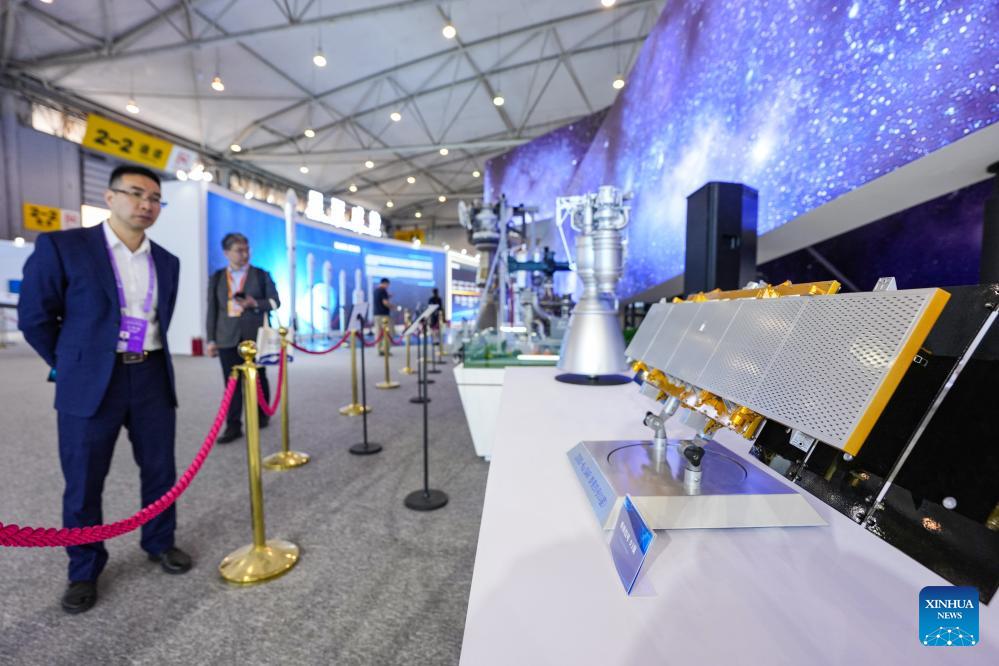
To solve the challenges of the next decade of exploration, the focus must move toward "long-term habitation logistics" and "resource utilization efficiency." The current missions are moving from "visit and return" to "prospect and process," with an emphasis on identifying water ice concentrations that could lower the "cost of oxygen" for future lunar bases by an estimated 60% to 80%. By standardizing the "interoperability" of these robotic systems and increasing the "frequency" of lunar transport cycles, the aerospace sector can reduce the "price per kilogram" of lunar freight, which currently stands at a prohibitively high "variable cost."
Ultimately, the 11th Space Day in Chengdu proves that the "return on investment" (ROI) in space is not just measured in rocks and dirt, but in the "acceleration of domestic innovation" across semiconductors, robotics, and propulsion systems. As China celebrates 56 years since its first orbital success, the "cosmos faith" mentioned in the theme is backed by a robust "project success rate" that currently leads the global average. In the 2026 fiscal landscape, space is no longer a distant frontier; it is a high-performance "economic engine" with a lifespan that extends well beyond the atmosphere.
News source:https://peoplesdaily.pdnews.cn/china/er/30051988639