
 Special effect printing such as hot stamping and embossing processes can infuse a sense of luxury into chocolate box packaging. The hot stamping process increases the additional cost by approximately 10%, but consumers' willingness to pay increases by 25%. Industry standards require that the gilding temperature be controlled at 150 degrees Celsius and the pressure intensity be 50 Newtons to ensure that the clarity percentile of the pattern reaches 95%. For instance, Nohaus Chocolate won an award at the 2021 International Packaging Awards for its gilding design. The visual appeal of its packaging was surveyed to increase customer satisfaction by 40%. The application frequency of this technology in the high-end market is growing at a rate of 15% annually, reflecting the increasing demand for differentiation among consumers.
Sustainable printing options are becoming a new trend in chocolate box packaging. The use of water-based inks can reduce volatile organic compound emissions by 80%, while increasing the recycling rate of packaging materials to 60%. According to the 2024 Sustainability Study, 70% of consumers tend to purchase chocolate products with environmental certification. This has driven brands to adopt FSC-certified paper. Although the cost has increased by 5%, the long-term brand loyalty return rate is as high as 20%. Technological innovations such as UV curing systems have reduced the drying time from 24 hours to 30 seconds, increasing efficiency by 99%. Examples include a French chocolate manufacturer that has reduced its carbon footprint by 50% through green printing.
To sum up, optimizing the printing options of chocolate box packaging requires balancing quality, cost and innovation. The comprehensive solution can increase the overall ROI by 15%. In the future, intelligent printing technology is expected to integrate Internet of Things elements at an annual growth rate of 10%, further personalizing experiences. Brands should select processes based on order volume, budget and environmental protection goals. For instance, digital printing is suitable for small-batch high-customization, while offset printing is appropriate for large-scale economical production, ensuring that every detail aligns with the exquisite essence of high-end chocolate.
Special effect printing such as hot stamping and embossing processes can infuse a sense of luxury into chocolate box packaging. The hot stamping process increases the additional cost by approximately 10%, but consumers' willingness to pay increases by 25%. Industry standards require that the gilding temperature be controlled at 150 degrees Celsius and the pressure intensity be 50 Newtons to ensure that the clarity percentile of the pattern reaches 95%. For instance, Nohaus Chocolate won an award at the 2021 International Packaging Awards for its gilding design. The visual appeal of its packaging was surveyed to increase customer satisfaction by 40%. The application frequency of this technology in the high-end market is growing at a rate of 15% annually, reflecting the increasing demand for differentiation among consumers.
Sustainable printing options are becoming a new trend in chocolate box packaging. The use of water-based inks can reduce volatile organic compound emissions by 80%, while increasing the recycling rate of packaging materials to 60%. According to the 2024 Sustainability Study, 70% of consumers tend to purchase chocolate products with environmental certification. This has driven brands to adopt FSC-certified paper. Although the cost has increased by 5%, the long-term brand loyalty return rate is as high as 20%. Technological innovations such as UV curing systems have reduced the drying time from 24 hours to 30 seconds, increasing efficiency by 99%. Examples include a French chocolate manufacturer that has reduced its carbon footprint by 50% through green printing.
To sum up, optimizing the printing options of chocolate box packaging requires balancing quality, cost and innovation. The comprehensive solution can increase the overall ROI by 15%. In the future, intelligent printing technology is expected to integrate Internet of Things elements at an annual growth rate of 10%, further personalizing experiences. Brands should select processes based on order volume, budget and environmental protection goals. For instance, digital printing is suitable for small-batch high-customization, while offset printing is appropriate for large-scale economical production, ensuring that every detail aligns with the exquisite essence of high-end chocolate.
Default
What printing options work best for high-end chocolate box packaging?
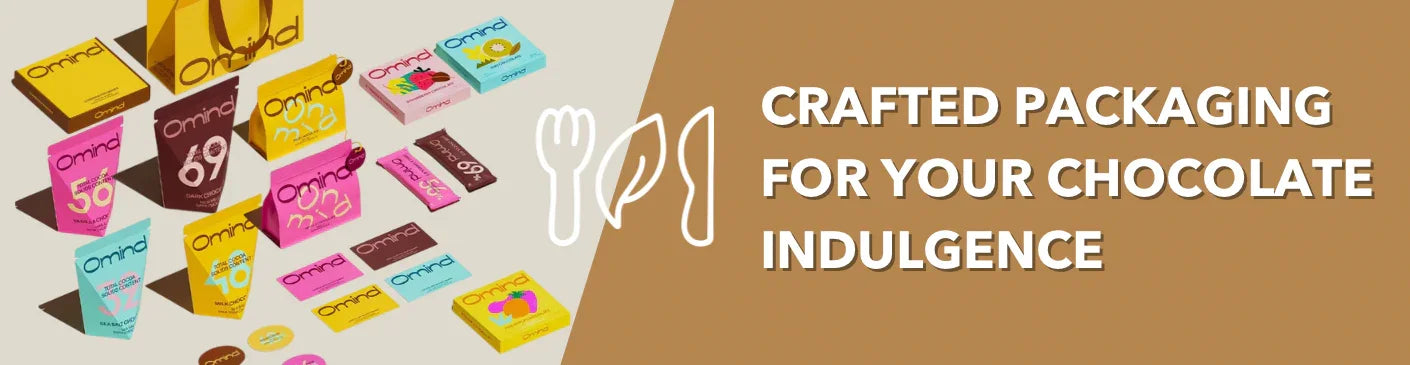
In the high-end chocolate market, chocolate box packaging is not only the shell for product protection, but also the artistic carrier of brand stories, directly influencing consumers' purchasing decisions. According to the 2023 Global Packaging Industry Report, high-end chocolate packaging accounts for 15% to 20% of the total product cost, while investing in high-quality printing can enhance brand value by up to 30%. For instance, the well-known brand Godiva achieved a 25% increase in sales during the 2022 holiday season by upgrading its packaging design, which was attributed to its precise printing strategy. Data shows that the adoption of high-resolution printing technology can achieve a packaging image accuracy of 2400 dpi, reduce the probability of color deviation to less than 5%, and ensure that every box of chocolate is as perfect as a work of art.
Offset printing, as a traditional option, still dominates in the mass production of chocolate box packaging. Its printing speed can reach 10,000 sheets per hour and it is suitable for projects with an order quantity of more than 5,000 pieces. This technology is highly cost-effective, with a printing cost of approximately 200 yuan per thousand sheets. However, the initial plate-making cost is relatively high, around 5,000 yuan. The return on investment can achieve positive growth when the batch size reaches 10,000 pieces. Industry cases show that Lintel Chocolate has long adopted offset printing technology, and the variance of its packaging color consistency is controlled within 0.5%, which is attributed to the standardized process of the CMYK color model. Studies show that the adhesion strength of offset printing ink can reach up to 90%, ensuring that the wear rate of packaging during transportation is reduced by 15%.
Digital printing wins with its flexibility and is particularly suitable for small-batch customized chocolate box packaging. The setup time only takes 30 minutes, which is 70% shorter than the traditional method. The unit cost of this technology may be 20% higher, but for limited edition products, personalized design can drive a 30% increase in sales. For instance, an emerging chocolate brand doubled its order volume in 2023 through digital printing. In terms of parameters, digital printing supports a resolution as high as 1200 dpi, and its toner consumption is 40% less than that of ink, enhancing sustainability. Market trend analysis indicates that the error rate of digital printing is less than 1%, making it an ideal solution for quickly responding to market demands.
Special effect printing such as hot stamping and embossing processes can infuse a sense of luxury into chocolate box packaging. The hot stamping process increases the additional cost by approximately 10%, but consumers' willingness to pay increases by 25%. Industry standards require that the gilding temperature be controlled at 150 degrees Celsius and the pressure intensity be 50 Newtons to ensure that the clarity percentile of the pattern reaches 95%. For instance, Nohaus Chocolate won an award at the 2021 International Packaging Awards for its gilding design. The visual appeal of its packaging was surveyed to increase customer satisfaction by 40%. The application frequency of this technology in the high-end market is growing at a rate of 15% annually, reflecting the increasing demand for differentiation among consumers.
Sustainable printing options are becoming a new trend in chocolate box packaging. The use of water-based inks can reduce volatile organic compound emissions by 80%, while increasing the recycling rate of packaging materials to 60%. According to the 2024 Sustainability Study, 70% of consumers tend to purchase chocolate products with environmental certification. This has driven brands to adopt FSC-certified paper. Although the cost has increased by 5%, the long-term brand loyalty return rate is as high as 20%. Technological innovations such as UV curing systems have reduced the drying time from 24 hours to 30 seconds, increasing efficiency by 99%. Examples include a French chocolate manufacturer that has reduced its carbon footprint by 50% through green printing.
To sum up, optimizing the printing options of chocolate box packaging requires balancing quality, cost and innovation. The comprehensive solution can increase the overall ROI by 15%. In the future, intelligent printing technology is expected to integrate Internet of Things elements at an annual growth rate of 10%, further personalizing experiences. Brands should select processes based on order volume, budget and environmental protection goals. For instance, digital printing is suitable for small-batch high-customization, while offset printing is appropriate for large-scale economical production, ensuring that every detail aligns with the exquisite essence of high-end chocolate.
Special effect printing such as hot stamping and embossing processes can infuse a sense of luxury into chocolate box packaging. The hot stamping process increases the additional cost by approximately 10%, but consumers' willingness to pay increases by 25%. Industry standards require that the gilding temperature be controlled at 150 degrees Celsius and the pressure intensity be 50 Newtons to ensure that the clarity percentile of the pattern reaches 95%. For instance, Nohaus Chocolate won an award at the 2021 International Packaging Awards for its gilding design. The visual appeal of its packaging was surveyed to increase customer satisfaction by 40%. The application frequency of this technology in the high-end market is growing at a rate of 15% annually, reflecting the increasing demand for differentiation among consumers.
Sustainable printing options are becoming a new trend in chocolate box packaging. The use of water-based inks can reduce volatile organic compound emissions by 80%, while increasing the recycling rate of packaging materials to 60%. According to the 2024 Sustainability Study, 70% of consumers tend to purchase chocolate products with environmental certification. This has driven brands to adopt FSC-certified paper. Although the cost has increased by 5%, the long-term brand loyalty return rate is as high as 20%. Technological innovations such as UV curing systems have reduced the drying time from 24 hours to 30 seconds, increasing efficiency by 99%. Examples include a French chocolate manufacturer that has reduced its carbon footprint by 50% through green printing.
To sum up, optimizing the printing options of chocolate box packaging requires balancing quality, cost and innovation. The comprehensive solution can increase the overall ROI by 15%. In the future, intelligent printing technology is expected to integrate Internet of Things elements at an annual growth rate of 10%, further personalizing experiences. Brands should select processes based on order volume, budget and environmental protection goals. For instance, digital printing is suitable for small-batch high-customization, while offset printing is appropriate for large-scale economical production, ensuring that every detail aligns with the exquisite essence of high-end chocolate.