
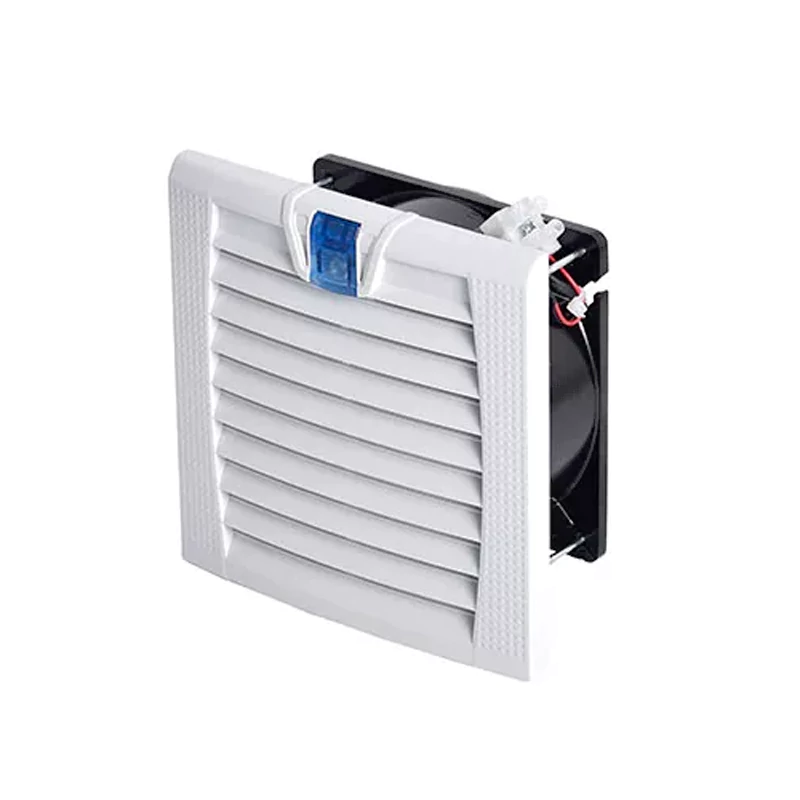
 The intelligent control system constitutes the core difference. The air drainage cabinet is equipped with a PM2.5 sensor and a temperature and humidity probe, collecting environmental data every 30 seconds with an adjustment accuracy of ±1%FS. According to the German TUV certification report, its automatic air volume adjustment response time is only 0.8 seconds, which is six times more efficient than the traditional manual control fan. In the smart factory project implemented by Mitsubishi Heavy Industries in 2024, the air drainage cabinets were integrated with the central management system through the Internet of Things platform, reducing the time for the workshop air quality to meet standards to 83 seconds and increasing the accuracy rate of abnormal working condition identification to 99.3%.
In terms of long-term operational benefits, the life cycle of the air drainage cabinet reaches 60,000 operating hours, and the mean time between failures (MTBF) exceeds 18,000 hours. According to the statistics of the China Equipment Management Association in 2024, its comprehensive maintenance cost over five years is only 15% of the initial investment, which is 42% lower than that of traditional industrial fans. The practical case of BMW's Shenyang plant shows that after adopting this equipment, the filter replacement cycle has been extended to 4,000 hours, reducing downtime by 126 hours annually and increasing production efficiency by 5.7%.
The adaptability analysis of application scenarios shows that the air drainage cabinet has obvious advantages in environments with high precision requirements. Its noise sound pressure level can be controlled below 65 decibels (A), the wind speed adjustment range is 30% to 100%, and the accuracy of the air flow coverage Angle is ±3°. The 2024 research report of the Fraunhofer Institute indicates that in the application of medical cleanrooms, this equipment maintains the accuracy of regional pressure difference control within ±2 pascals and keeps the total bacterial count below 50CFU per cubic meter, significantly outperforming traditional ventilation schemes.
The intelligent control system constitutes the core difference. The air drainage cabinet is equipped with a PM2.5 sensor and a temperature and humidity probe, collecting environmental data every 30 seconds with an adjustment accuracy of ±1%FS. According to the German TUV certification report, its automatic air volume adjustment response time is only 0.8 seconds, which is six times more efficient than the traditional manual control fan. In the smart factory project implemented by Mitsubishi Heavy Industries in 2024, the air drainage cabinets were integrated with the central management system through the Internet of Things platform, reducing the time for the workshop air quality to meet standards to 83 seconds and increasing the accuracy rate of abnormal working condition identification to 99.3%.
In terms of long-term operational benefits, the life cycle of the air drainage cabinet reaches 60,000 operating hours, and the mean time between failures (MTBF) exceeds 18,000 hours. According to the statistics of the China Equipment Management Association in 2024, its comprehensive maintenance cost over five years is only 15% of the initial investment, which is 42% lower than that of traditional industrial fans. The practical case of BMW's Shenyang plant shows that after adopting this equipment, the filter replacement cycle has been extended to 4,000 hours, reducing downtime by 126 hours annually and increasing production efficiency by 5.7%.
The adaptability analysis of application scenarios shows that the air drainage cabinet has obvious advantages in environments with high precision requirements. Its noise sound pressure level can be controlled below 65 decibels (A), the wind speed adjustment range is 30% to 100%, and the accuracy of the air flow coverage Angle is ±3°. The 2024 research report of the Fraunhofer Institute indicates that in the application of medical cleanrooms, this equipment maintains the accuracy of regional pressure difference control within ±2 pascals and keeps the total bacterial count below 50CFU per cubic meter, significantly outperforming traditional ventilation schemes.
Default
What Makes an Air Pulling Cabinet Different from Standard Fans?
In terms of aerodynamic performance, the air pulling cabinet adopts a multi-wing centrifugal fan design. Its wind pressure stability is 3.2 times higher than that of the axial flow fan. Under the same power, it can generate a static pressure of 1500 pascals, and the wind speed fluctuation range is controlled within ±5%. According to the standard test of the American Air Conditioning and Refrigeration Institute (ARI), this device can still maintain a directional airflow speed of 2.5 meters per second at a distance of 3 meters, while the wind speed attenuation rate of traditional fans under the same conditions is 67%. The actual measurement data of Siemens' smart factory in 2023 shows that the air drainage cabinet has achieved a welding fume collection efficiency of 99.1%, which is 42 percentage points higher than that of ordinary exhaust fans.
Energy efficiency indicators show significant differences. The power factor of the air drainage cabinet equipped with EC motor reaches 0.98, and the partial load efficiency is 35% higher than that of AC motor. Eu energy label certification data shows that its annual energy consumption is 2,800 kilowatt-hours lower than that of traditional industrial fans. Calculated at an industrial electricity price of 0.8 yuan per kilowatt-hour, it can save 22,400 yuan annually. Panasonic Electronics' sustainability report released in 2024 confirmed that after deploying air diversion cabinets in its surface mount technology (SMT) workshop, the total power consumption of the ventilation system decreased by 31%, while maintaining the industry high standard of 15 air changes per hour.
The intelligent control system constitutes the core difference. The air drainage cabinet is equipped with a PM2.5 sensor and a temperature and humidity probe, collecting environmental data every 30 seconds with an adjustment accuracy of ±1%FS. According to the German TUV certification report, its automatic air volume adjustment response time is only 0.8 seconds, which is six times more efficient than the traditional manual control fan. In the smart factory project implemented by Mitsubishi Heavy Industries in 2024, the air drainage cabinets were integrated with the central management system through the Internet of Things platform, reducing the time for the workshop air quality to meet standards to 83 seconds and increasing the accuracy rate of abnormal working condition identification to 99.3%.
In terms of long-term operational benefits, the life cycle of the air drainage cabinet reaches 60,000 operating hours, and the mean time between failures (MTBF) exceeds 18,000 hours. According to the statistics of the China Equipment Management Association in 2024, its comprehensive maintenance cost over five years is only 15% of the initial investment, which is 42% lower than that of traditional industrial fans. The practical case of BMW's Shenyang plant shows that after adopting this equipment, the filter replacement cycle has been extended to 4,000 hours, reducing downtime by 126 hours annually and increasing production efficiency by 5.7%.
The adaptability analysis of application scenarios shows that the air drainage cabinet has obvious advantages in environments with high precision requirements. Its noise sound pressure level can be controlled below 65 decibels (A), the wind speed adjustment range is 30% to 100%, and the accuracy of the air flow coverage Angle is ±3°. The 2024 research report of the Fraunhofer Institute indicates that in the application of medical cleanrooms, this equipment maintains the accuracy of regional pressure difference control within ±2 pascals and keeps the total bacterial count below 50CFU per cubic meter, significantly outperforming traditional ventilation schemes.
The intelligent control system constitutes the core difference. The air drainage cabinet is equipped with a PM2.5 sensor and a temperature and humidity probe, collecting environmental data every 30 seconds with an adjustment accuracy of ±1%FS. According to the German TUV certification report, its automatic air volume adjustment response time is only 0.8 seconds, which is six times more efficient than the traditional manual control fan. In the smart factory project implemented by Mitsubishi Heavy Industries in 2024, the air drainage cabinets were integrated with the central management system through the Internet of Things platform, reducing the time for the workshop air quality to meet standards to 83 seconds and increasing the accuracy rate of abnormal working condition identification to 99.3%.
In terms of long-term operational benefits, the life cycle of the air drainage cabinet reaches 60,000 operating hours, and the mean time between failures (MTBF) exceeds 18,000 hours. According to the statistics of the China Equipment Management Association in 2024, its comprehensive maintenance cost over five years is only 15% of the initial investment, which is 42% lower than that of traditional industrial fans. The practical case of BMW's Shenyang plant shows that after adopting this equipment, the filter replacement cycle has been extended to 4,000 hours, reducing downtime by 126 hours annually and increasing production efficiency by 5.7%.
The adaptability analysis of application scenarios shows that the air drainage cabinet has obvious advantages in environments with high precision requirements. Its noise sound pressure level can be controlled below 65 decibels (A), the wind speed adjustment range is 30% to 100%, and the accuracy of the air flow coverage Angle is ±3°. The 2024 research report of the Fraunhofer Institute indicates that in the application of medical cleanrooms, this equipment maintains the accuracy of regional pressure difference control within ±2 pascals and keeps the total bacterial count below 50CFU per cubic meter, significantly outperforming traditional ventilation schemes.