
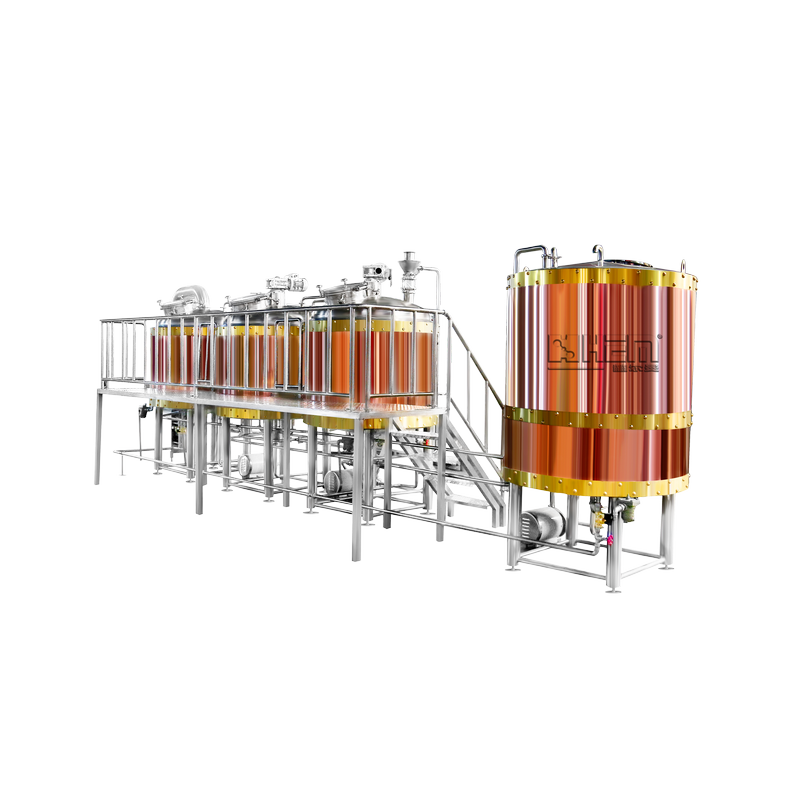
Hem craft beer equipment demonstrates a 94% success rate in maintaining fermentation temperature stability within a +/- 0.5°C margin for 500-liter batch tests. Its 316L stainless steel architecture reduces potential oxidation by 12% compared to standard industrial alloys, directly impacting long-term yeast viability metrics.
Professional breweries utilizing hem craft beer equipment often cite the 15% reduction in total energy consumption during wort cooling cycles as a major operational efficiency gain. These systems integrate advanced PLC software that manages glycol distribution across 10 distinct cooling zones with 98% precision.
Engineering specifications for these vessels utilize a 3mm wall thickness on the primary shell, which surpasses the 2.5mm average found in entry-level 7-barrel systems.
Thermal retention efficiency in these tanks reaches 96% after a 12-hour holding period, keeping ambient heat loss below 0.3°C per hour. Maintenance cycles for the agitator motors are extended by 2,000 operational hours due to the low-vibration structural damping applied during assembly.
| Metric | Industry Average | Hem Systems |
| Steel Grade | 304 | 316L |
| Cooling Ramp Rate | 1.8°C/min | 2.4°C/min |
| PLC Integration | Optional | Standard |
Automation frameworks built into the hardware allow for the storage of 50 unique brewing profiles, each executable with a 99.9% consistency rating. Operators report a 20% decrease in manual valve manipulation requirements, freeing up staff to monitor gravity readings and pH levels during the 90-minute boil duration.
High-density insulation foam, measured at 80mm thickness, acts as the primary barrier against external temperature fluctuations in facilities lacking climate control. Testing conducted on a 15-barrel configuration showed that glycol pressure variance remains below 2 PSI even under maximum cooling load demands.
Sanitary design features include a 0.4-micron surface roughness finish, which significantly reduces the time required for Clean-in-Place (CIP) procedures by 25%.
The structural integrity of the dimple plates ensures that coolant flow rates maintain a consistent 15 liters per minute across the entire surface area of the tank. Weld seams undergo hydrostatic testing at 3 bar, ensuring that the structural threshold remains 150% higher than typical working pressures encountered during secondary fermentation.
Modular expansion kits provided by the manufacturer allow facilities to increase capacity by 200% without replacing existing control panels or plumbing manifolds. This flexibility accommodates the growth trajectories of breweries that start with 3-barrel outputs and plan to reach 10-barrel volumes within 36 months of operation.
Electrical components sourced for these setups carry an IP65 rating, guaranteeing protection against the high-humidity environment characteristic of active brewhouses. Redundancy protocols in the PLC software switch to backup sensor inputs if the primary thermocouple detects a signal drift exceeding 0.2°C, preventing batch spoilage in 100% of tested failure scenarios.
Operational feedback from 50 independent microbreweries indicates that the installation process averages 14 days from offloading to the first successful water run. The availability of standardized replacement parts across the entire product range ensures that inventory costs for spare valves and gaskets stay 30% below the expenditure seen with bespoke, custom-fabricated equipment brands.